Whether you are an engineer, fabricator, manufacturer, or someone with a custom project in mind, steel laser cutting is one of the most precise and efficient ways to turn a design into a physical part. But not all laser cutting services are equal, and knowing what separates a quality cut from a poor one can save you significant time, money, and frustration.
This guide covers how steel laser cutting works, what affects quality and turnaround, and what to look for when choosing a laser cutting service in South Africa.
How Steel Laser Cutting Works
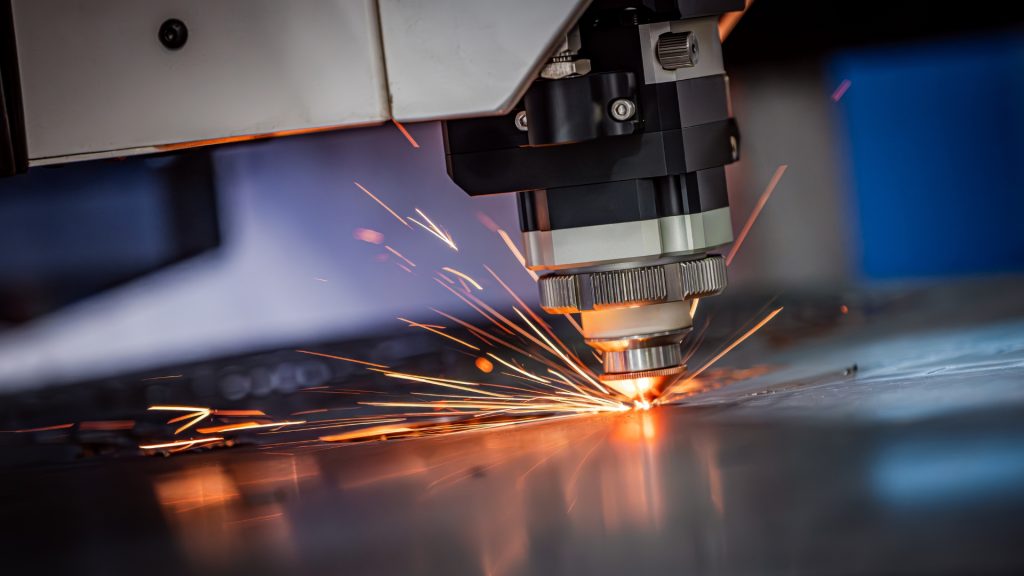
Laser cutting uses a focused beam of high-intensity light to cut through steel with extreme precision. The beam is guided by CNC (computer numerical control) technology, meaning the cutting path follows an exact digital file rather than relying on manual operation. This makes it possible to cut highly complex shapes, tight tolerances, and repeated parts with consistent accuracy every single time.
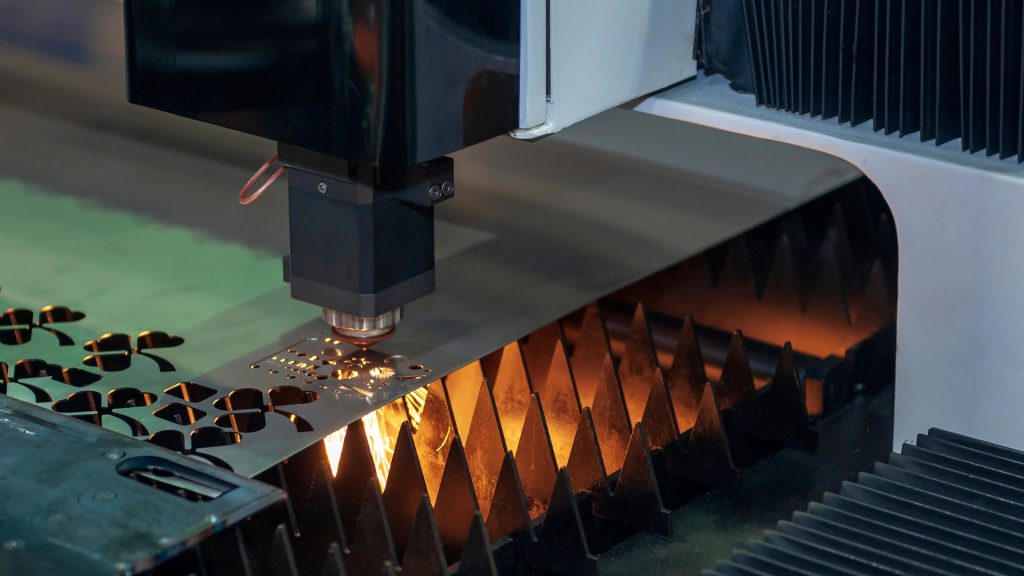
The process works on both flat plate steel and tube or pipe profiles. Plate cutting handles sheet material and is used for everything from structural brackets and flanges to decorative panels and machine parts. Tube cutting handles round, square, and rectangular steel profiles and is commonly used in fabrication, automotive, and industrial applications.
At 1Laser, both tube and plate CNC laser cutting services are offered from their facility in Isando, Kempton Park, with parts ready in as little as one to three working days.
Why Steel Is One of the Most Common Laser Cutting Materials
Steel is the most widely laser cut material for good reason. It responds extremely well to laser cutting, producing clean edges with minimal burring and very tight dimensional accuracy. Mild steel, stainless steel, and galvanised steel are all commonly cut using this process.
Mild steel is the most frequently cut material because it is affordable, widely available, and cuts cleanly across a broad range of thicknesses. Stainless steel requires slightly more power and a different assist gas setup but produces exceptionally clean, bright edges that often need no secondary finishing. Galvanised steel can be cut but requires proper ventilation and fume extraction during the process due to the zinc coating.
What Determines the Quality of a Laser Cut
Several factors influence whether a laser cut part comes out exactly right or needs rework.
Machine Capability and Maintenance
The quality of the laser cutting machine itself matters enormously. A well-maintained, high-powered machine will cut consistently through a range of material thicknesses without edge defects like dross, slag, or excessive heat-affected zones. Regular calibration and lens maintenance are not optional for a service provider serious about quality.
Your DXF File
The digital file you supply drives the entire cut. A clean, accurate DXF file with properly closed geometry, correct scale, and no overlapping lines will produce a clean, accurate part. Errors in the file translate directly into errors in the cut. If you are not confident preparing your own DXF files, 1Laser offers CAD and design services to help you get from concept to cuttable file without the guesswork.
Nesting
Nesting refers to how parts are arranged on the sheet of steel before cutting. Efficient nesting minimises material waste and reduces cost. A good service provider will nest your parts intelligently, particularly if you are ordering multiple components from a single sheet.
Tolerance and Edge Quality
For most structural and fabrication applications, laser cutting tolerances of ±0.1mm to ±0.2mm are standard and more than adequate. For precision mechanical parts, tighter tolerances may be required and should be discussed with your service provider upfront. Edge quality on laser cut steel should be smooth with minimal oxidation, particularly on thinner gauges.
The Difference Between Laser Cutting, Plasma Cutting, and Waterjet Cutting
These three processes are often compared and each has its place.
Plasma cutting is faster and less expensive for thick material but produces a wider kerf and rougher edge finish. It is a good choice for structural steel where edge quality is less critical but becomes problematic when tight tolerances or clean edges are needed.
Waterjet cutting uses high-pressure water mixed with abrasive particles to cut through material without heat. It is excellent for materials that cannot tolerate heat, like certain alloys, composites, or glass, but it is slower and more expensive than laser cutting for standard steel work.
Laser cutting sits in the middle ground and, for most steel applications, wins on the combination of speed, accuracy, edge quality, and cost. For parts where precision and repeatability are important, it is almost always the best option.
What Services to Expect from a Quality Laser Cutting Provider
Beyond the cut itself, a full-service laser cutting provider should be able to offer more than just putting a sheet on a machine and pressing start.
Bending is often needed after cutting. Many parts require one or more bends to reach their final form, and having this done by the same supplier who cut the parts saves time and ensures the bends are accurately positioned relative to the cut geometry. 1Laser’s precision bending service handles tube and plate bending in-house, which means your parts can be cut and bent without being shipped to a second supplier.
Laser marking is useful when parts need identification, branding, or reference marks. This is done using the same laser technology at lower power settings and produces permanent, precise markings on the steel surface without affecting the structural integrity of the part.
CAD and design support is essential for clients who have an idea but no technical drawing. A good service provider can take your sketch, concept, or verbal description and produce a proper DXF file ready for cutting.
How to Prepare Your Order
Getting your order right from the start avoids delays and unnecessary back-and-forth.
Supply a DXF file where possible. This is the standard format for laser cutting and allows your service provider to load the file directly into the cutting machine’s software without conversion or interpretation errors. If you are working from a drawing, PDF, or sketch, your provider may be able to assist with the conversion.
Specify your material clearly. State the material type, grade where relevant, and the thickness you require. If you are supplying your own material, confirm this with your provider before sending the order through.
Indicate quantities and any finishing requirements. If parts need to be deburred, bent, or marked after cutting, this should be included in the initial quote request so the full scope of work can be priced accurately.
1Laser accepts DXF file uploads directly through their quote form and responds with an all-inclusive quote. For DSFX files or any file format queries, you can email directly to info@1laser.co.za.
Turnaround Times and Delivery
One of the most common frustrations with fabrication services is waiting. Production schedules slip, lead times stretch, and projects stall while parts sit in a queue.
1Laser operates on a cut-today, deliver-tomorrow model where possible, with a maximum turnaround of three working days. For businesses running tight production schedules or project managers working to a deadline, this kind of consistent turnaround is significant. Order updates are sent at each stage of the process so you are never left wondering where your parts are.
Delivery covers Kempton Park and surrounding areas, and shipping is available nationally for customers outside of Gauteng.
Why Local Matters
Ordering steel laser cut parts from an overseas supplier may seem cost-effective on the surface but the combination of shipping costs, import duties, long lead times, and the difficulty of resolving errors makes local fabrication the far more practical choice for most applications.
A local provider can be contacted directly, can inspect your file before cutting, can make quick adjustments if something needs to change, and can get parts to you in days rather than weeks. For repeat orders and ongoing production requirements, that relationship becomes genuinely valuable.
1Laser is based at 6 Tungsten Road, Isando, Kempton Park, and can be reached on +27 (0) 82 416 7711 or via WhatsApp for fast communication.
Final Thoughts
Steel laser cutting is one of the most versatile and precise manufacturing processes available, and getting the most out of it comes down to choosing a service provider that takes quality, communication, and turnaround seriously.
Whether you need a single custom bracket or a production run of complex components, the process is straightforward when you work with a provider that knows what they are doing.
Get a free, no-obligation quote by visiting 1laser.co.za and uploading your DXF file. If your design is not quite ready, the team can help you get there.