
Stainless steel is one of the most widely used materials in South African manufacturing, fabrication, and construction. It is strong, corrosion resistant, hygienic, and visually appealing in a way that mild steel simply cannot match. It is also one of the most demanding materials to cut accurately, which is why choosing the right laser cutting service for stainless steel work matters more than it does for most other materials.
This guide covers what makes stainless steel different to cut, which grades are most commonly used in South Africa, what affects the quality of a stainless steel laser cut, and what to look for when choosing a service provider.
Why Stainless Steel Is Different to Laser Cut
Stainless steel shares many characteristics with mild steel from a laser cutting perspective but there are several important differences that affect how the material behaves under the laser beam and what the finished cut looks like.
The chromium content that gives stainless steel its corrosion resistance also affects how the material responds to heat. Stainless steel conducts heat less efficiently than mild steel, which means heat builds up more rapidly in the cutting zone. If this is not managed correctly through the right combination of laser power, cutting speed, and assist gas, the result is an excessive heat-affected zone along the cut edge, discolouration, and in some cases warping or distortion of the part.
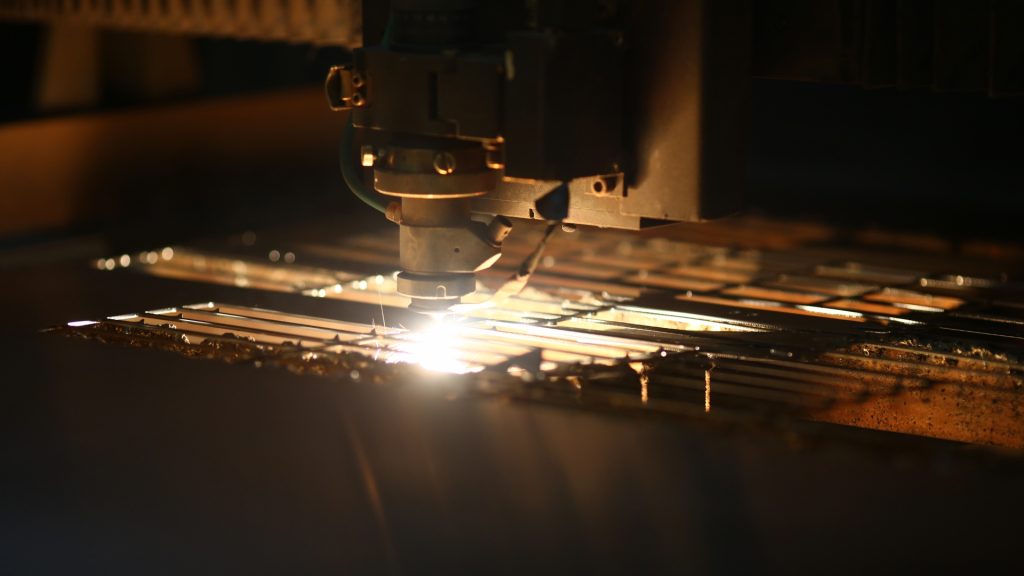
A well-set-up laser cutting machine running the correct parameters for the specific grade and thickness of stainless steel being cut produces a bright, clean edge with minimal discolouration and a very small heat-affected zone. This is the standard you should expect from a quality laser cutting service, and it is the standard that 1Laser in Isando, Kempton Park holds its stainless steel cutting to.
The Assist Gas Makes a Significant Difference
One of the most important variables in stainless steel laser cutting is the assist gas used during the cutting process. The assist gas blows molten material out of the cut kerf and affects both the quality of the cut edge and the level of oxidation on the finished surface.
Nitrogen is the preferred assist gas for stainless steel laser cutting where a bright, oxide-free edge is required. Because nitrogen is an inert gas it does not react with the stainless steel surface during cutting, which means the cut edge retains the clean, bright appearance of the base material without the brown or blue oxidation that oxygen-assisted cutting produces. For parts that will be visible in the finished product, particularly in food processing, medical, or architectural applications, nitrogen-cut stainless steel is almost always the correct specification.
Oxygen can be used for stainless steel cutting at higher thicknesses where the exothermic reaction it produces helps drive the cut through material that nitrogen alone would struggle with. The trade-off is an oxidised edge that requires additional finishing if a clean appearance is needed. For structural components where edge appearance is secondary to dimensional accuracy, oxygen-assisted cutting is a cost-effective option.
Common Grades of Stainless Steel Used in South Africa
Not all stainless steel is the same, and the grade you specify affects both the cutting parameters required and the performance of the finished part in its intended application.
Grade 304 is the most commonly used stainless steel in South Africa across a wide range of industries. It offers good corrosion resistance, is readily available, and cuts cleanly on a well-maintained laser cutting machine. It is the default choice for most general fabrication, food processing equipment, kitchen equipment, and architectural applications where the environment does not involve chloride exposure.
Grade 316 offers significantly better corrosion resistance than 304, particularly in environments where chloride exposure is a concern. This makes it the preferred choice for coastal applications, marine equipment, chemical processing, and medical devices. It is slightly more expensive than 304 and requires careful parameter management during laser cutting to achieve the same edge quality, but for applications where its enhanced corrosion resistance is needed there is no practical substitute.
Grade 430 is a ferritic stainless steel that is less expensive than the austenitic grades like 304 and 316 but offers lower corrosion resistance and is less commonly used for precision fabrication. It is sometimes specified for decorative applications and automotive trim where its magnetic properties and lower cost make it attractive.
Grade 409 and 441 are both commonly used in the exhaust and automotive sector in South Africa due to their heat resistance and cost-effectiveness relative to higher-grade austenitic steels.
If you are unsure which grade is appropriate for your application, the 1Laser team can advise based on the intended use, environment, and performance requirements of your parts before you commit to a material specification.
Thickness Ranges for Stainless Steel Laser Cutting
The thickness of stainless steel that can be accurately laser cut depends on the power of the laser cutting machine being used. As a general guide for fibre laser cutting machines operating at the power levels used in modern South African laser cutting facilities, the following thickness ranges apply.
Thin sheet stainless steel from 0.5mm to 3mm is where laser cutting produces its most impressive results. The cut is fast, the edge quality is excellent, and dimensional accuracy is at its tightest. This range covers most sheet metal fabrication, food processing equipment panels, catering equipment, and decorative screening applications.
Medium gauge stainless steel from 3mm to 8mm covers the range most commonly used for structural brackets, machine guards, industrial equipment components, and architectural elements. Cut quality at this range is still very good on a well-maintained machine but cutting speed reduces and the importance of correct parameter setup increases.
Thick stainless steel from 8mm to 20mm and beyond is where laser cutting requires the most power and the most careful parameter management. Edge quality at this range is more variable and some applications may benefit from a finishing operation after cutting to achieve the required surface quality. For very thick stainless steel where edge finish is critical, discussing the application with your service provider before ordering is always worthwhile.
What Affects the Quality of a Stainless Steel Laser Cut
Several factors determine whether a stainless steel laser cut part comes out to the standard you need or requires rework.
Machine Condition and Calibration
A laser cutting machine that is not regularly serviced and calibrated produces inconsistent results. Lens contamination, misaligned optics, and worn consumables all degrade cut quality in ways that are not always immediately visible but show up as dimensional inaccuracies, rough edges, and excessive dross on the underside of the cut. A quality service provider maintains their equipment to a schedule rather than reactively, and the consistency of their output reflects this.
Your File Quality
As with all laser cutting materials, the quality of your DXF file drives the quality of the cut. A clean file with properly closed geometry, correct scale in millimetres, no duplicate lines, and text converted to curves gives the machine a clean set of instructions to follow. File errors produce cutting errors regardless of how good the machine is. If you need help preparing your DXF file, 1Laser offers a CAD and design service that takes your drawing or concept and produces a ready-to-cut file.
Material Flatness
Stainless steel sheet that is not flat creates problems during laser cutting because the focal point of the laser beam is set for a specific distance from the cutting head to the material surface. Warped or bowed sheet moves the material surface in and out of focus across the cutting area, which produces inconsistent edge quality and can cause the cut to fail entirely in severely warped areas. For precision work, specifying flat sheet and confirming with your supplier that the material will be properly supported during cutting is worth doing upfront.
Nesting and Material Utilisation
Efficient nesting of parts on the stainless steel sheet directly affects the cost of your order. Stainless steel is significantly more expensive than mild steel, which means material waste has a more pronounced effect on the total cost of a stainless laser cutting job. A good service provider will nest your parts intelligently to minimise waste, particularly on orders involving multiple components cut from the same sheet.
Applications Where Stainless Steel Laser Cutting Is Most Common
The combination of corrosion resistance, strength, and aesthetic quality that stainless steel provides makes it the material of choice across a wide range of industries and applications in South Africa.
Food processing and catering equipment is one of the largest application areas for stainless steel laser cutting in South Africa. Equipment panels, conveyor components, machine guards, hoppers, chutes, and structural frames for food-safe environments are all routinely laser cut from 304 or 316 stainless steel because the material meets the hygiene and corrosion resistance requirements of the food industry.
Architectural and decorative applications including screens, cladding panels, balustrades, signage, and decorative elements use laser cut stainless steel extensively. The precision of laser cutting allows complex patterns and fine details to be reproduced accurately in stainless steel, which is difficult or impossible to achieve with other cutting methods.
Medical and laboratory equipment requires the corrosion resistance and cleanability of stainless steel and the dimensional accuracy of laser cutting. Brackets, panels, frames, and housings for medical equipment are commonly laser cut from 316 grade stainless steel.
Industrial and engineering applications including machine components, jigs, fixtures, brackets, and custom fabrications make up a significant portion of stainless steel laser cutting work in the Gauteng manufacturing corridor. The combination of strength and corrosion resistance that stainless offers is valuable in manufacturing environments where equipment is exposed to cleaning chemicals, humidity, or corrosive processes.
Finishing Options After Laser Cutting
Laser cut stainless steel can be used directly from the machine in many applications, but some projects benefit from additional finishing operations after cutting.
Deburring removes any sharp edges or minor dross from the cut edge and is particularly important for parts that will be handled by people or installed in environments where sharp edges create a safety or aesthetic concern.
Bending is commonly needed to produce three-dimensional components from flat laser cut profiles. 1Laser’s in-house precision bending service handles both plate and tube bending, which means your stainless steel parts can be cut and bent at the same facility without being transferred to a second supplier.
Polishing or brushing the cut edges and surfaces produces a consistent surface finish that matches the base material appearance and is particularly important for visible architectural and decorative applications.
Passivation is a chemical process that restores the passive oxide layer on stainless steel surfaces that have been affected by heat or mechanical processing, enhancing the material’s corrosion resistance. For medical, food processing, and coastal applications where maximum corrosion resistance is required, passivation after laser cutting is worth specifying.
How to Place a Stainless Steel Laser Cutting Order With 1Laser
The process starts with uploading your DXF file through the quote form on the 1Laser website. Along with your file, specify the stainless steel grade, the material thickness, and the quantity of parts required. If your order includes bending or other secondary operations, include this in your initial enquiry so the full scope of work can be quoted accurately.
1Laser reviews every file before quoting to identify any issues that could affect the cut before the order is confirmed. Turnaround from confirmed order to completed parts is typically one to three working days, with local delivery available in the Kempton Park and Ekurhuleni area and nationwide shipping for customers further afield.
For complex projects, unusual material specifications, or orders where you need technical advice before preparing your file, contact the team directly on +27 (0) 82 416 7711 or via WhatsApp. The facility is located at 6 Tungsten Road, Isando, Kempton Park, and welcomes clients who prefer to discuss their requirements in person.
Final Thoughts
Stainless steel laser cutting is a precision process that rewards working with a service provider who takes machine maintenance, parameter setup, and file quality seriously. The difference between a well-cut stainless steel part and a poorly cut one is immediately visible in the edge quality, dimensional accuracy, and surface appearance of the finished component.
Getting it right the first time saves rework, reduces waste, and ensures that the parts you receive are ready to use rather than requiring additional processing before they can be fitted or assembled.
Submit your DXF file for a free quote at 1laser.co.za or call the team on +27 (0) 82 416 7711 to discuss your stainless steel laser cutting requirements before you send anything through.